Buying a small business in London should feel like stepping into a well-built house. Solid foundations, rooms with a purpose, wiring that makes sense. When the numbers line up with reality, you know it. When they don’t, you feel it in your stomach. The challenge is that sellers often price based on potential, sentiment, or hearsay comparables, while buyers must pay from actual cash flow. That gap is where good valuation guidance pays for itself.
I have spent years helping buyers sift through small businesses for sale across London and Southwestern Ontario, from owner-operated trades firms to multi-location service companies. The patterns repeat. Overpricing clusters around three things: optimistic add-backs, misunderstood risk, and sloppy comparables. The work of a seasoned business broker is to translate stories into defensible numbers. At Liquid Sunset Business Brokers, our job is not to talk you into a deal. It is to tell you where the floor is, where the ceiling might be, and whether the roof will leak when it rains.
What “value” actually means when you’re the buyer
Sellers talk about value as a blend of brand, legacy, and upside. Lenders and accountants reduce it to debt service coverage and normalized cash flow. Buyers sit in the middle, trying to buy the future but only being able to finance the present. That tension plays out in the multiple you pay on earnings.
The foundation is Seller’s Discretionary Earnings, or SDE, for owner-operated businesses. SDE begins with net income and adds back the salary of a single working owner, along with one-time or non-operating costs. For larger or more professionally managed firms, we shift toward EBITDA, which excludes owner’s comp and focuses on the operating engine.
That distinction matters because London’s market is heavy on owner-led companies. A lawn care firm with the owner in the field, a specialty bakery where the founder handles wholesale relationships, a construction trade with one foreman who also bids jobs. If you remove the owner, the earnings may shrink unless you backfill their role with salaried leadership. The more integral the owner is to sales and delivery, the less transferable the earnings, and the lower the defensible multiple.
The SDE multiple: the number everyone chases, and why it moves
Buyers hear rules of thumb: two to three times SDE for typical main-street businesses, maybe three to four for more resilient service models. But a range without context will get you into trouble. Here is what I look at before putting a number on the table.
Revenue concentration. If two customers make up 55 percent of revenue, you are buying key account risk. That knocks the multiple down. If the top customer is less than 10 percent, that stabilizes the number.
Recurring revenue. Contracted maintenance, subscription-like services, or multi-year supply agreements support higher multiples. One-off projects drag you back to a conservative stance.
Owner dependence. If the owner brings in half the sales and keeps the team motivated by sheer presence, the transition risk is high. Paying at the top of the range assumes you can become that owner on day one, which is rarely true.
Documentation quality. A seller who can produce three to five years of clean financials, tax returns that agree with internal statements, and credible add-backs commands a better price. When books are a shoebox and a handshake, the multiple follows suit.
Labour market and replaceability. In London, skilled trades have been tight, and that affects valuations. A heating and cooling business with five licensed techs and stable tenure is worth more than a similar firm constantly recruiting. Replacing specialized staff is costly and slow.
Working capital needs. If the business consumes cash in receivables and inventory, you will need more than the purchase price to operate it. That reduces your effective return and, in turn, the multiple that still works.
Regulatory exposure. If revenue depends on permits, inspections, or sensitive licensing, the deal needs to price in delays and constraints. Lower predictability, lower multiple.
When Liquid Sunset Business Brokers evaluates a business in London, Ontario, those variables decide whether a two-times or a three-and-a-half-times multiple is realistic. The difference sounds small, but on 400,000 dollars of SDE, each half-turn is 200,000 dollars.
Add-backs: where overpaying often begins
Add-backs are legitimate when they strip out noise and reveal the true earnings power a buyer can step into. They become fiction when they shovel anything convenient under the “one-time” label. If you want to avoid overpaying, attack add-backs with patience and documentation.
Owner’s comp and perks. A single working owner’s compensation is addable, yes. So are genuine perks that will not continue, like the owner’s personal vehicle that is not needed for operations. But if the business requires a manager post-close, that cost must come back out. The best test is substitution: what would you have to pay someone to do the owner’s https://erickwhip058.yousher.com/salon-and-spa-small-business-for-sale-london-near-me job?
Family on payroll. If a spouse does bookkeeping and a son works weekends, those wages might be discretionary, or they might be market labor in disguise. Look at duties. If you will need to pay someone to pick up those tasks, treat them as ongoing expenses.
Repairs and maintenance. The words “one-time” and “extraordinary” get abused here. Replacing a roof every 20 years is extraordinary. Fixing a delivery van twice a year is normal. Review general ledger details to see patterns, not labels.
Professional and legal fees. Litigation settlements and one-off consulting projects can be add-backs, but verify with invoices and context. If a consulting fee turned into a recurring dependency, it is not one-time.
COVID-era adjustments. Many sellers still want to normalize unusual pandemic swings. Some adjustments are fair, some are wishful. Scrutinize whether demand actually recovered or if a temporary demand surge is fading.
If the add-backs are aggressive, price must respond. At Liquid Sunset Business Brokers, we prefer to model three earnings cases, then stress-test debt service at each. That is how you prevent optimism from becoming an expensive lesson.
London specifics: market texture and lender expectations
London is not Toronto. That matters for both pricing and financing. The buyer pool is smaller, the industries tilt toward trades, construction, local services, healthcare, and light manufacturing, and lenders look for discipline on DSCR - typically north of 1.25 on a normalized basis, with some preferring 1.35 when revenue concentration or seasonality is present.
Banks and BDC financing often require a meaningful down payment, commonly 10 to 25 percent, plus a vendor take-back note for another 10 to 20 percent in smaller deals. If you are looking at a small business for sale in London, Ontario, and the asking price presumes leverage that would drive coverage below one, the price is wrong. That is a simple but powerful filter.
I have seen a cleaning company with 300,000 dollars of SDE listed at 1.3 million dollars. On paper, that is a 4.3 multiple. In reality, receivables ran at 60 days, equipment needed renewal, and the owner was in the field forty hours a week. Fair value sat closer to 900,000 to 1,000,000 with an earn-out tied to client retention. The deal only made sense after the seller agreed to share the transition risk.
Working capital: the quiet, expensive detail
Buyers focus on headline price and often miss the cash required to run the business after closing. Working capital is the blood in the system. If you do not receive a normalized level at closing, you will be writing cheques in month one to make payroll and keep suppliers happy.
Most small deals in London transfer with a target level of net working capital, usually current assets minus current liabilities, excluding cash and debt. The definition matters as much as the number. A service company with 200,000 dollars in receivables and 40,000 in payables needs a different working capital package than a cash-and-carry retailer with minimal receivables. When Liquid Sunset Business Brokers structures a purchase, we spend as much time on these mechanics as on price, because a fair price with a starving balance sheet is still a bad buy.
The vendor story: motivations that influence price
Every seller has a reason. Retirement, burnout, relocation, partnership disputes, or simply wanting to cash out after a good run. Motivations shape flexibility. The retiring owner who wants their staff protected might accept a lower cash price for a thoughtful transition. The partner dispute needing a fast exit may discount for speed. The proud founder with three offers and patient timing will expect a premium.
This is not soft psychology. It is economics. Earn-outs, vendor take-back notes, and transition support are price levers disguised as relationship terms. If you care about avoiding overpaying, learn the vendor’s story and craft terms that share risk in proportion to uncertainty.
Why comparables mislead in small business deals
Real estate buyers live by comps. Small business buyers cannot. The sample size is too small, and the variance in business models is too wide. A plumbing firm doing mostly service calls cannot be valued against a plumbing contractor bidding on large commercial projects, even if revenue and headcount match. Same industry, different risk.
What works better is building a set of anchored references. Look at three recent local transactions if you can, then expand to regional and industry data. Adjust for the qualities that matter: recurring revenue, margin stability, owner dependence, and capital intensity. When Liquid Sunset Business Brokers compiles valuation guidance, we call other brokers, we triangulate with lender appetite, and we layer in our pipeline knowledge. You will not find that nuance in a generic industry multiple chart.
The London buyer’s brief: three valuations, not one
When you are buying a business in London, the correct price sits inside a band, not at a point. I like to draft three valuations.
Conservative case. Normalize SDE with minimal add-backs, assume customer churn at the worst of the last three years, and include a market salary for the owner’s role if you will not fill it yourself. Price at the bottom of the multiple range.
Base case. Accept reasonable add-backs with documentation, use mid-range churn, and assume a typical transition where the seller trains for three months. Price at a mid-range multiple.
Upside case. Consider the synergies you uniquely bring - a complementary customer base, shared back office, cross-selling. Keep the multiple in check, but model what the business could be worth to you after 12 to 24 months.
We then lean on financeability. If the conservative case cannot service debt at coverage of at least 1.25 with room for your living costs if you will work in the business, the price is not for you. That is how Liquid Sunset Business Brokers helps buyers walk away from deals that look good on a glossy CIM but do not survive the cash flow test.
Real numbers from the field, adjusted for privacy
A local specialty manufacturer with 1.8 million in revenue and 400,000 dollars of SDE was listed at 1.2 million plus inventory. Clean books, stable team, but three customers at 65 percent of sales. After diligence, customer concentration and a single-point failure in production management surfaced. We structured 950,000 total consideration with 200,000 paid as an earn-out against retention of the top two accounts over 18 months. The seller accepted because they believed in the relationships. The buyer avoided overpaying by tying price to what actually stayed.
A health services company with recurring membership fees reported 250,000 dollars of SDE. Add-backs included a 45,000 marketing push labeled one-time and 30,000 of owner travel. The marketing became a reliable channel and needed to be ongoing at 30,000 to sustain growth. We reclassed that portion as operating expense, reduced SDE to 235,000, and landed at a 3.1 multiple given strong retention and prepaid revenue. Small changes, big outcome.
The diligence rhythm that protects your purchase
There is a sequence that helps buyers keep emotions in check.
- Paper first, stories second. Start with tax returns, T2s, and HST filings. Ensure revenue ties to reality before falling in love with the narrative. Normalize earnings with evidence. Every add-back needs a line item, an invoice, or a clear explanation you would be willing to defend to a lender. Test transferability. Identify tasks the owner does today and assign them to people and processes post-close. Price the gaps. Validate the top customers. No blind deals if two customers make up 40 percent of revenue. Secure introductions under a well-crafted LOI and NDA when feasible, or build an earn-out accordingly. Model working capital. Define the peg, run a 90-day cash flow, and align payment timing with reality.
That list is not bureaucratic. It is how you turn a private business into a bankable asset.
When to walk away, even if you can afford it
Some deals are affordable but still wrong. Red flags include a seller who refuses to provide tax filings that reconcile with internal statements, combative behavior around reasonable diligence requests, or sudden price increases justified by vague “new opportunities” that never make it to paper. Another is key employee risk where two people hold institutional memory and will leave when the owner leaves, but the seller will not sign retention bonuses or help secure employment agreements. Overpaying is not only about dollars. It is about taking on invisible liabilities at any price.
The role a broker plays when they are doing it right
Not every business broker in London, Ontario operates the same way. At Liquid Sunset Business Brokers, we aim to bring clarity without sugarcoating. That means we will exclude questionable add-backs before we present a business to buyers, and we will discuss warts early rather than late. It also means we will advise buyers to reduce price or include contingent terms when risk appears. You may see our listings labeled differently as a result. We would rather close fewer, better deals than many troubled ones.
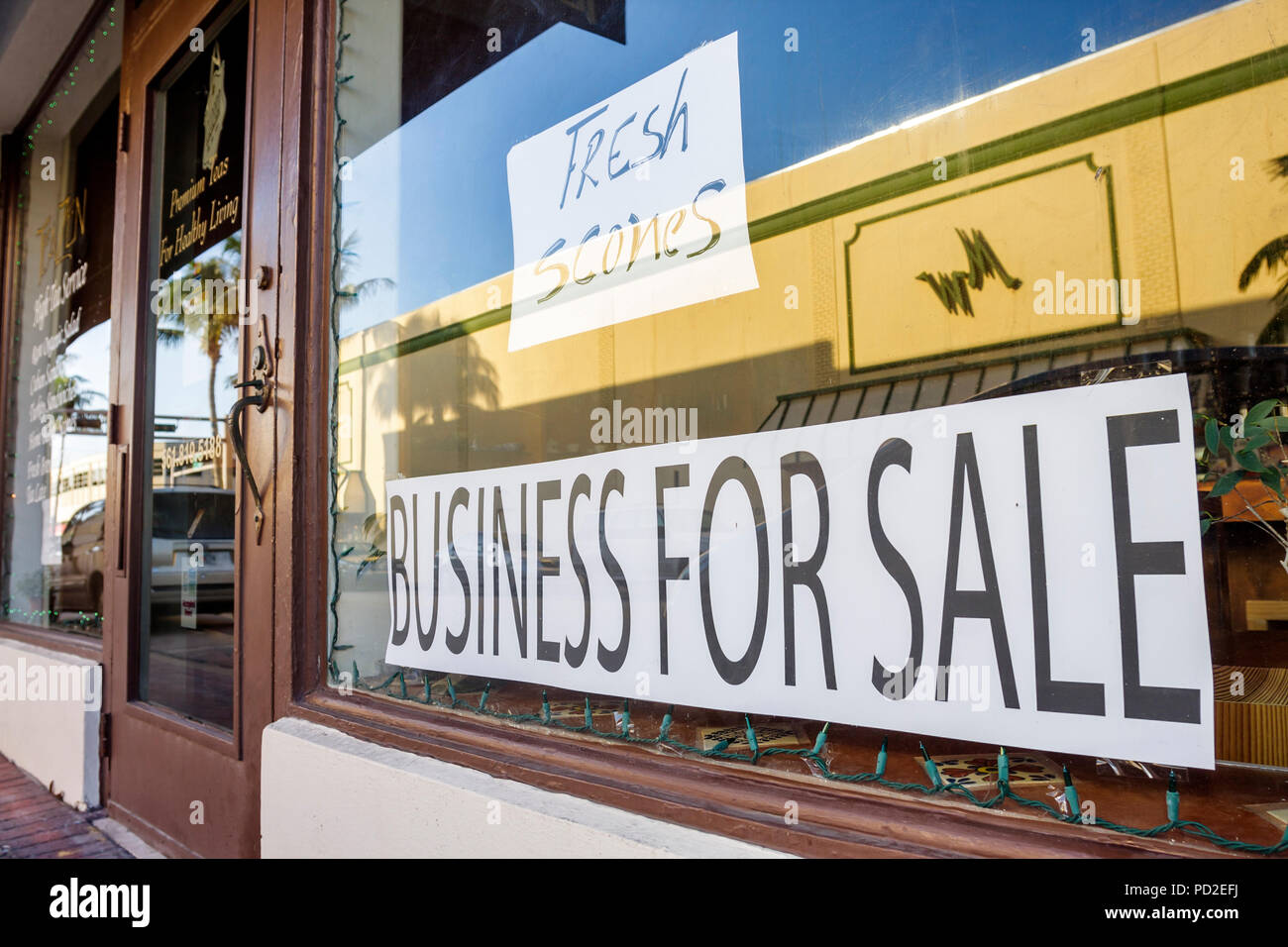
If you are seeking a small business for sale in London, Ontario, our team can help you prioritize sectors where your skill set fits the work. Fit predicts both your tolerance for risk and your ability to capture the upside you are paying for. Some buyers thrive in sales-driven environments. Others prefer operational complexity with steady demand. Knowing yourself is part of valuation because your skill reduces owner dependence, which increases transferable earnings.
Fairness that survives Monday morning
People toss around that a fair deal leaves both sides a little unsatisfied. I prefer a different test: the price should survive Monday morning after closing. If you wake up and realize you must hit a hero’s number every week to service debt, you overpaid. If the seller wakes up and feels they gave away a company that would have easily fetched more in a clean process, they underpriced. We aim for a number supported by SDE that can withstand a few bad months, paired with terms that protect against concentrated risk.
In practical terms, that means stress-testing revenue at 90 percent of the trailing twelve months, padding expenses for wage inflation, and acknowledging that integration always costs more time and money than you expect. If the deal still works, pay the price with confidence.
How to engage with valuation help early, not late
Buyers often call a business broker after they have emotionally committed to a specific listing. The better path is to meet early, map your search criteria, and define your investment box. At Liquid Sunset Business Brokers, we walk through debt appetite, desired owner role, preferred industries, and available time for transition. That lets us filter opportunities and pre-negotiate realistic expectations with sellers. Your odds of avoiding overpaying go up when your team speaks the same valuation language from the first call.
If you are already in talks, we can still help. We can review add-backs, structure an LOI that preserves your ability to renegotiate after diligence, and design earn-outs that do not become endless disputes. The benefit of working with business brokers in London, Ontario who know the local lenders, accountants, and lawyers is simple: the right people around the table keep the deal honest.
A last word on patience
Good businesses at fair prices appear, then disappear. If you miss one, let it go. Overpaying to avoid missing out is a habit that compounds in the wrong direction. A patient buyer with a ready plan, clear financial model, and disciplined view of value will not only pay less over time, they will sleep better and run healthier companies.
If you are serious about buying a business in London and want valuation guidance that cuts through fog, reach out. Liquid Sunset Business Brokers will tell you what the numbers can carry, what they cannot, and how to shape a deal that pays you back in both dollars and peace of mind.